
Effective traffic incident management is vital to the successful operation of modern highway systems in the state of Nevada. By working towards an enhanced level of interagency coordination, collaboration and communication through the activities surrounding an active coalition of traffic incident management stakeholders there is a proven difference in roadway clearance times, enhancing safety and decreasing the number of crashes, even fatalities.
City and county boundaries are not contained by traffic; congestion knows no boundaries. As such, efficient performance of traffic incident management practices has increased in complexity, requiring technology and a well-planned, coordinated, multi-disciplinary response.
Please click on the following link for further information.
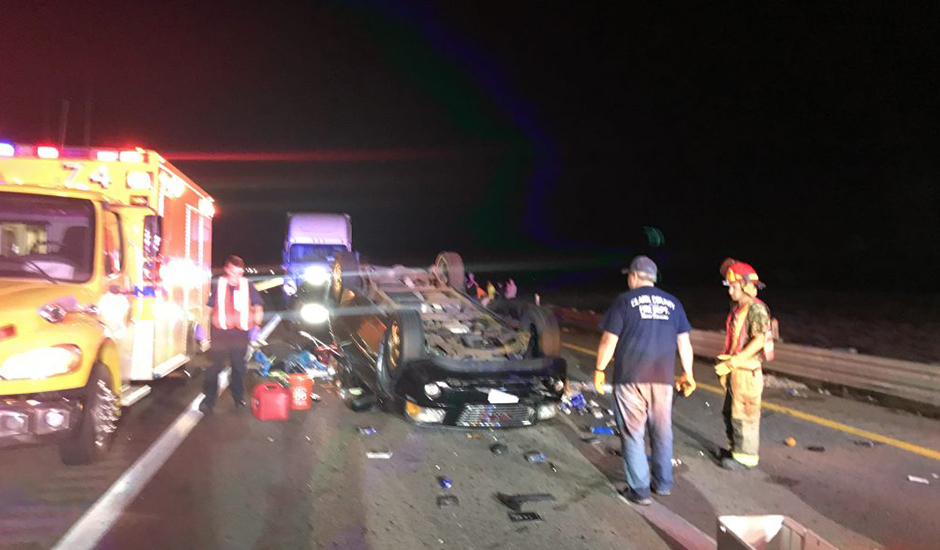

Back in 2018 & 2019, Nevada started to see a decline in fatalities on our roadways. Unfortunately, that was all temporary as in the past 6 plus years, we have seen over 350 Nevadans killed. The major cause of the fatalities has been impairment & speeding, per the Department of Public Safety. With that, there has been an increased focus of training Nevada’s First Responder community and to emphasize the importance of safety while on scene of a vehicle crash. This has led to over 2500+ of the first responders in Nevada being trained in the SHRP2 4-hr TIM Training classes in the past 4 years. Over 83% of Nevada’s responders who are involved in clearing crashes and traffic management activities throughout Nevada, have participated in TIM SHRP2 Multiagency Training, presented through the TIM Coalition FHWA certified trainers. Currently, Nevada is currently 7th in the nation for First Responders being trained in this worthwhile and lifesaving training. We will continue to push this training to keep all involved as safe as possible. A major focus will continue to be the Safe, Quick Clearance of a vehicle crash.
All agencies also follow the Nevada Statewide Open Road Policy, signed by NDOT, DPS and the Governor and supported by the Nevada TIM Guidelines. Kudos to Nevada’s AMAZING First responders for saving lives.
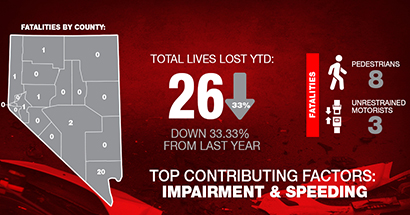
2025 Nevada Fatalities
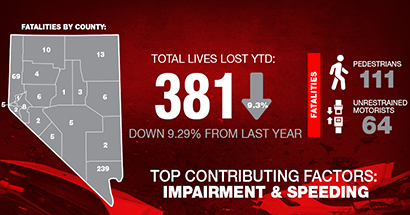
2026 Nevada Current Fatalities
The national numbers for first responders struck-by’s is a number that we all cannot live with. Per www.respondersafety.com , the numbers since 2019 have gone up with a small decline in 2025. For our Nevada First Responders, we have to do all we can to protect our brothers and sisters while they are on scene of a traffic crash. The national struck-by numbers are as follows:
| Year | LEO | Fire/EMS | Tow | Road Serv. Tech | DOT/SSP | Total |
|---|---|---|---|---|---|---|
| 2019 | 18 | 9 | 14 | 3 | 0 | 44 |
| 2020 | 17 | 4 | 21 | 1 | 3 | 46 |
| 2021 | 30 | 9 | 22 | 2 | 2 | 65 |
| 2022 | 17 | 11 | 18 | 4 | 1 | 51 |
| 2023 | 14 | 8 | 20 | 0 | 3 | 45 |
| 2024 | 26 | 3 | 12 | 1 | 4 | 46 |
| 2025 | 16 | 3 | 10 | 3 | 3 | 35 |
| Avg p/yr | 19.7 | 6.7 | 16.7 | 2.0 | 2.3 | 47.4 |
Below are some reference for the laws passed for the benefit of Nevada’s First Responders:
Senate Bill 312 was signed by Governor Brian Sandoval in May 2017. This important legislation strengthens several TIM-related laws, including the requirement for cars to move over or slow down for emergency vehicles, requirements for motorists to move cars from the travel lanes after a crash if possible, and vehicle removal laws. The legislation went into effect on October 1, 2017. You can read the legislation here:
Senate Bill 312 (NRS 484B.267)
Assembly Bill 2 enacts all First Responders that are not covered under any other emergency lighting laws to incorporate the use of non-flashing (static) blue lights to the rear of the vehicle. You can read the legislation here:
Assembly Bill AB2 (NRS. 484B.607)
Assembly Bill AB56 (NRS 484B.210 discusses the Running of the Shoulder for First Responders as well as the details and regulations related to this bill. You can read the legislation here:
The Nevada Open Roads Policy was renewed during the October 2021 Nevada Traffic Safety Summit in Las Vegas. To review details of the policy, please click below on the Nevada Open Roads Policy link below.
In July of 2024, Nevada TIM Coalition & NDOT, partnered with local First Responders to hold a Rural Safety Summit in Elko, NV. This summit had various sessions with presentations and interactions that proved to be very valuable. The topics that were presented covered many items such as a Communications Update, Federal & Local Grants Update, Speed in the Rurals, Electric Vehicle Response, a DUI Workshop, and concluded with a 3 vehicle MCI demonstration. This event was very well attended by over 80 local and statewide First Responders and others. NDOT was able to produce this video during the event. We are grateful to all of those that attended this worthwhile event as well as all of those that helped to coordinate the sessions and the MCI demo.
[vc_row][vc_column][vc_single_image image=”38381″ img_size=”full” alignment=”center” el_class=”traffic”][/vc_column][/vc_row]